
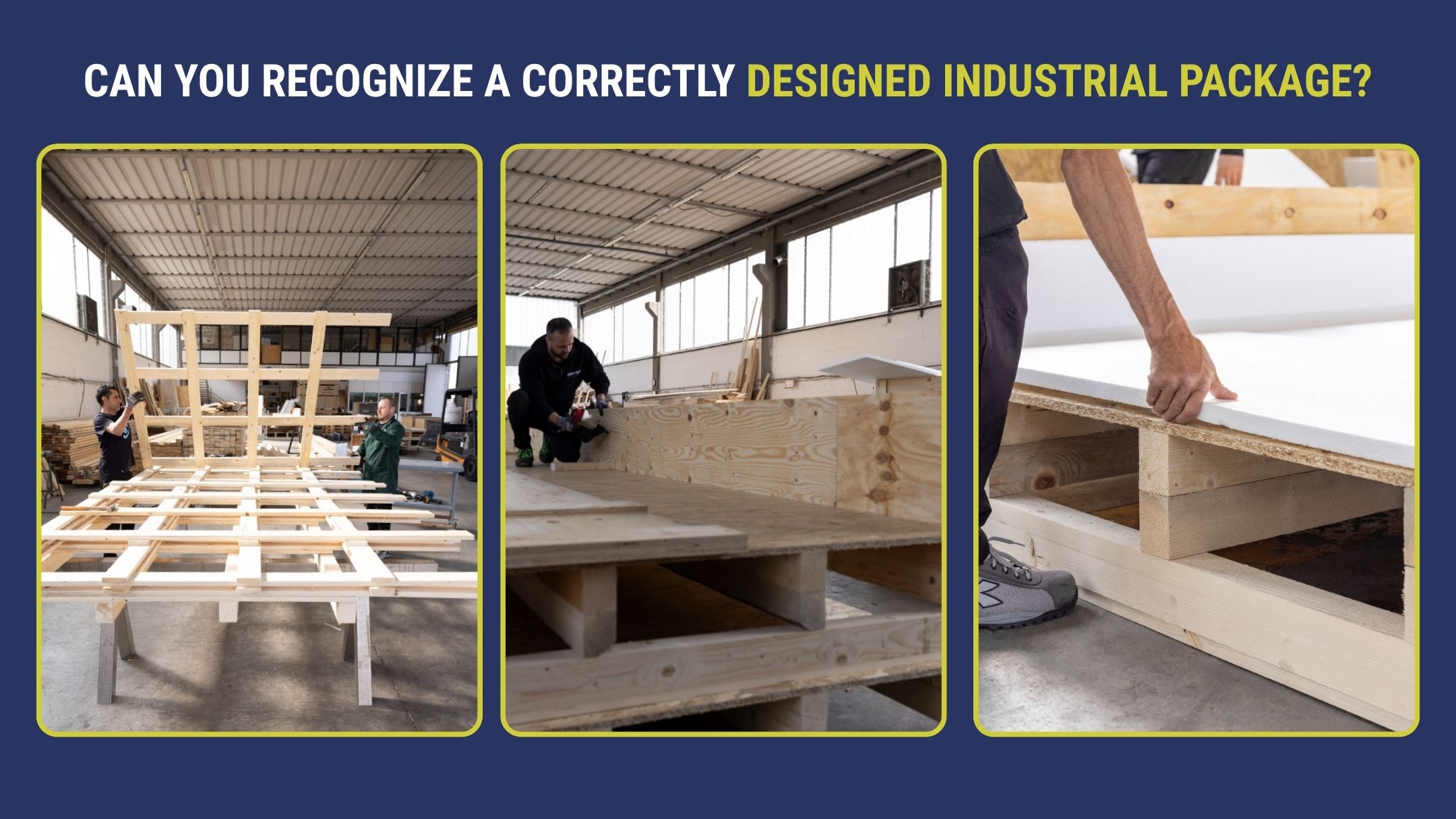
Can You Recognize Properly Designed Industrial Packaging?
The success of a shipment does not depend solely on the means of transport. Poorly designed packaging can lead to delays, product damage and additional costs.
Among the most common mistakes are:
✔️ Using standard packaging for products with different characteristics. Weight, dimensions, fragility and center of gravity require solutions specifically designed for each case.
✔️ Failing to consider transportation stresses. Vibrations, impacts, stacking loads and forklift handling can compromise load stability if not properly addressed during the design phase.
✔️ Overlooking the effects of humidity and condensation. During sea freight transportation, significant temperature fluctuations can lead to condensation, increasing the risk of corrosion, oxidation and product deterioration.
✔️ Using wooden packaging that does not comply with ISPM 15 regulations. Non-compliance may result in customs delays, shipment rejection or mandatory treatments in the destination country.
✔️ Involving the packaging supplier only after shipping arrangements have been finalized. Assessing the product, logistics route and transportation methods from the earliest stages helps identify the most suitable solution and reduce the risk of unexpected issues.
Proper packaging design is an investment in product protection and in the efficiency of the entire supply chain.